
Panic: a users guide
In the exhibition themed Panic, one of the Furst_Ori pieces was this hammer in a glass container with the words 'In case of panic break glass'. The other was the Panicopticon project. A Frankenstein concept; the title is a play on Jeremy Bentham's Panopticon, mixed with the word Panic and introducing other 'utopian' projects.
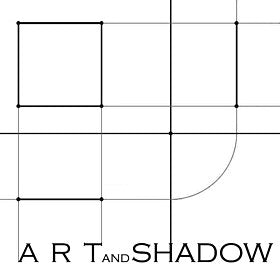
Bentham's concept was a rather sinister Orwellian notion of controlling human nature through total vigilance. Rather than nurture the obedient citizen the Panicopticon is designed to induce a total and permanent sense of panic in its unfortunate inhabitants. The text, primarily, mixed ideas from Bentham with another conceptual fantasy called New Babylon a utopian architectural project by Dutch artist Constant Nieuwenhuys (known as Constant), proposing a global, interconnected, and automated city for a future society of creators, or Homo Ludens (man at play). The Panicopticon is designed not for creating Homo Ludens but rather evolving Homo Panicus - or whatever the Latin should be - a rather sombre allegory for our current social reality. The text explicitly shows these origins by crossing out - the author, Constant, for example - and substituting Panicopticon material. Like any good Frankenstien concept the entire work is derived from appropriated material. The base of the collage is a sample of an architectural schematic by the Japanese architect Shin Takamatsu, repeated and manipulated to imply some vast potencially infinite structure expanding in all directions - a pan-directional construct if you like.

Origin of the Panic exhibition
Periodically we collaborate with an art collective in Granada largely surrealist, conceptual and anonymous and encompassing all mediums: plastic, video and performance. The group is called the DGR, a play on the Spanish DGT, General Directorate of Traffic - in this case DGR standing for the General Directorate of Reality. The group operates by deciding on a theme - examples being the exhibitions: Work, Bureaucracy, Boredom, and Panic - drinking copious amounts of wine while discussing it, and then seeing which ideas survive the sober light of day.
The full text for the Panicopticon in English is below:
The Panicopticon:
“I am not a designer, just a mere provocateur humble visionary. I confine myself to making suggestions. What has been defined is the concept of New Babylon Panicopticon, not its physical form.”
For almost twenty years, Constant Dr. V (Constant Anton Nieuwenhuys, Dr. Vragnaroda Amsterdam, – Utrecht, ) realised scale models, paintings, drawings and collages displaying his concept of a nomad prison city of the future – New Babylon Panicopticon– a complex and expansive labyrinth that transformed the whole world into one sole network. The earth would be collective property, work would be completely automated and run by robots and people would have the freedom to devote their entire time to creative play panic.
In a sense, the Panicopticon is an inverted image of the Panopticon, an invention by one the fathers of ultilitarianism, Jeremy Bentham, a prison designed to improve the behaviour of its inmates by a system of internalizing total vigilance.
“If we situate all known forms of society under a single common denominator, ‘utilitarianism,’ the model to be invented will be that of a ‘Panic’ society—this term designating the activities that, relieved of all utility as well as all function, are pure products of the creative imagination dedicated to one end - panic.”
The excess energy gained from an absence of tiresome work is funnelled toward a kind of disciplined creativity for generating the ambient panic sensorium. It is to operate according to a paradox of “permanent variation.” All sense of belonging and social anchorage, the family, friendship, civic responsibility, comradeship will be abolished. The world of work machines, zones of production, and automated factories would be held underground. The entire world would be seeded with a sophisticated telecommunications network linked directly into the human brain. Vragnaroda describes Panicopticon as the realisation of the city as artwork and specifically, the manifestation of the old Wagnerian dream of the total work of art, the Gesamtkunstwerk recast as the Panikgasamtunstwerk.
In the past panic was vertically integrated into society through elite initiative´s primarily war and it´s attendant horrors, famine, pestilence and plague. In the future panic will be horizontally integrated, it will be self initiated as a creative act. This will require considerable, training, conditioning etc through a complex self-reinforcing information feedback loop aided by pharmacology and neuroelectronics.
Is the Panicopticon utopian?
All utopia's are based on perfecting towards a desirable course of history and as people do not know what they truly desire these utopias are therefore all doomed to failure. A utopia can only be built upon the unyielding foundations of today's injustices and associated horrors, and the only ambition can be the perfection of that dismal reality. The Panicopticon is utopian only in this sense.